Posts

“We’re Still No.1” — Upstage's Bold Response to Elon Musk

Image
  “We’re Still No.1” — Upstage's Bold Response to Elon Musk In July 2025, something remarkable happened in Korea’s AI scene. As Elon Musk’s xAI was touting its latest large language model (LLM), Grok-4 , a much smaller Korean startup — Upstage — made global headlines with its new model, SOLAR Pro 2 , standing shoulder-to-shoulder with Big Tech giants. But what truly captured attention wasn’t just the performance—it was the public exchange that followed. Elon Musk took to X (formerly Twitter) to declare, “Grok is still #1 and improving fast.” Upstage’s CEO, Sung Kim, replied: “Congrats. But it won’t last long.” This wasn’t mere social media banter. It marked the first time a Korean-born LLM challenged the world’s largest models — not in ambition, but in actual performance, efficiency, and technological edge. Upstage’s VS SOLAR Pro 2: Small, But Unmatched in Efficiency Upstage’s SOLAR Pro 2 was recently highlighted in the Intelligence Index by the independent evaluation gr...

[The Potential of Korean Minhwa: From Tradition to Global Content] Part 3: Cultural Industry Strategy for Korean Minhwa Characters – From Tradition to Creative Convergence and Global Content

Image
  The Potential of Korean Minhwa: From Tradition to Global Content Part 3: Cultural Industry Strategy for Korean Minhwa Characters – From Tradition to Creative Convergence and Global Content 1. Minhwa Characters, a New Source of Cultural Industry In Part 1, we explored the symbolism and emotional depth of Korean minhwa characters. In Part 2, we compared them to folk characters from other cultures to highlight their unique competitiveness. Now in Part 3, we focus on how these characters can be practically utilized in today's fast-evolving cultural industry—and how they can leap into global content through specific strategies. Minhwa characters are not mere relics of the past. They are living cultural DNA, condensed from the collective imagination, humor, and auspicious hopes of the Korean people. When combined with modern technology and creativity, this unique heritage can serve as a powerful engine for the next wave of K-Culture. Examples of Expanded Applications of Korean Folk Pa...

[Characters in Minhwa: From Tradition to Future Content] Part 2: Across Mythical Worlds – Positioning Korean Minhwa in a Global Folk Tradition

Image
[Characters in Minhwa: From Tradition to Future Content] Part 2: Across Mythical Worlds – Positioning Korean Minhwa in a Global Folk Tradition  The Potential of Korean Minhwa: A Cultural DNA Shared Across Borders Subtitle: Uncovering the Cultural and Imaginative DNA Hidden in Japanese Yokai, Chinese Divine Beasts, and European Fairies 1. Universality of Imagination, Originality of Culture Throughout history, humans have infused their worldviews, daily lives, and creative imagination into stories and images. In all corners of the world, folk paintings and folklore reveal unique characters intrinsic to each culture. These characters are more than artistic depictions—they embody the hopes, fears, and wit of the people, forming a visual language with deep symbolic resonance. In Part 1, we explored the diverse realm of characters within Korean minhwa. Now in Part 2, we widen our lens to examine folk characters from Japan, China, and Europe. Through this comparative analysis, we highligh...

[Characters in Minhwa: From Tradition to Future Content] Part 1: Exploring the World of Korean Minhwa Characters – Reading Symbols and Sentiments

Image
  [Characters in Minhwa: From Tradition to Future Content] Part 1: Exploring the World of Korean Minhwa Characters – Reading Symbols and Sentiments 1. What Is Minhwa? – Folk Paintings Born of Imagination and Aspirations Minhwa (民畵) refers to a style of painting that developed spontaneously among the common people during the late Joseon Dynasty. Unlike court paintings created by royal artists, minhwa portrayed themes such as blessings, longevity, protection, humor, and hope—rooted in the everyday lives and desires of ordinary people. These works are not mere decorative art. They represent the imagination, emotions, and worldview of the masses, making minhwa a deeply rooted cultural asset. More than just historical artifacts, these paintings serve as a reservoir of archetypal creativity that can be applied to today’s content industries. We often assume we know our culture well. Yet, if we fail to harness it ourselves, we may end up simply watching foreign creators turn our herit...

The Recorded Tale of the 'Bigeo (飛車)', 300 Years Before the Wright Brothers

Image
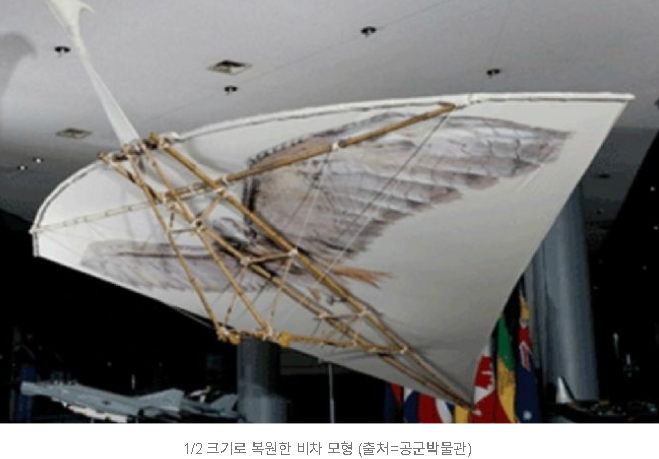
 The Recorded Tale of the 'Bigeo (飛車)', 300 Years Before the Wright Brothers** A flying cart during the Imjin War—Was it mere legend, or an early form of flight? This article explores the documented accounts of Joseon Korea’s mysterious “Bigeo” and its place in the history of aviation. Introduction In 1903, the Flyer aircraft designed by the Wright brothers marked the beginning of modern aviation. But centuries earlier, during Korea’s Imjin War (1592–1598), historical records suggest that a man named Jeong Pyeong-gu built and operated a flying machine called the Bigeo (飛車) —translated as "flying vehicle" or "aerial cart." Is this just a legend from a bygone era? Or could the Bigeo represent an early and largely forgotten chapter in the global story of flight? This article examines the historical texts referencing the Bigeo, compares it to other ancient flying concepts, and explores the broader scientific culture of Joseon-era Korea. What Was the Bige...