Posts

Showing posts with the label Korean history

Korea's World-Leading Achievements: Verified Milestones in Human Civilization

Image
  Korea's World-Leading Achievements: Verified Milestones in Human Civilization Introduction Korea and its historical predecessor states—Gojoseon, the Three Kingdoms, Goryeo, and Joseon—have made original and practical contributions to human civilization. Some of these accomplishments are the earliest of their kind in the world, supported by physical artifacts and written records. They are not merely regional innovations but tangible contributions to the global evolution of science, knowledge, and governance. In this article, we summarize globally recognized achievements of Korea that were truly firsts in human history. We also explore their significance in the broader context of world history and their implications for humanity. Proven World Firsts Originating from Korea 1. Metal Movable Type Printing — Jikji (1377, Goryeo) Jikji is the world's oldest surviving book printed using metal movable type. Published in 1377 in Goryeo Korea, it predates Gutenberg's Bible by 78 ye...

The Elephant in the Annals: A Remarkable Tale from the Joseon Dynasty

Image
  The Elephant in the Annals: A Remarkable Tale from the Joseon Dynasty When one thinks of the Joseon Dynasty (1392–1897), images of Confucian scholars, wooden palaces, and royal ceremonies come to mind. But among the volumes of The Annals of the Joseon Dynasty —a UNESCO World Heritage record spanning over 500 years—lies a most unexpected entry: the story of an elephant. Not only was the elephant recorded in precise bureaucratic language, but it also sparked debates, accidents, and logistical headaches across the royal court. This article explores the fascinating journey of the first elephant in Korea, as documented by the meticulous royal scribes of the Joseon court. A Gift Unlike Any Other 1411: A Gift Unlike Any Other “The King of Japan sent an elephant—an animal unseen in our country. It was ordered to be kept and raised by the Office of Royal Stables (Saboksi), consuming 4 to 5 do of beans each day.” — Annals of King Taejong , 11th Year (1411), February 22 In 1411, K...

[The Annals of the Joseon Dynasty] Korea’s Greatest Legacy to the World, a UNESCO-Recognized Historical Record

Image
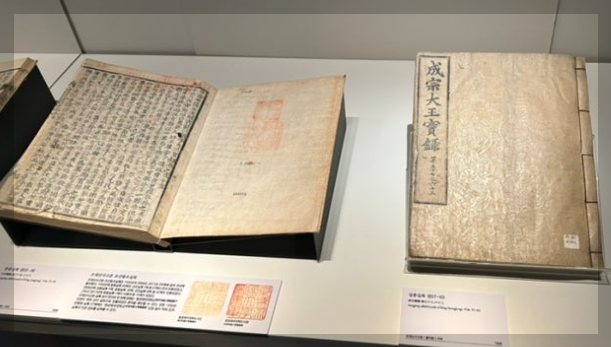
[The Annals of the Joseon Dynasty] Korea’s Greatest Legacy to the World, a UNESCO-Recognized Historical Record More Than Just a Chronicle The Annals of the Joseon Dynasty represent far more than a simple record of a ruling family. They are a pioneering masterpiece of civilization’s commitment to documentation—one rarely matched anywhere in world history. Spanning 472 years across 25 reigns, this vast archive meticulously chronicles political events, diplomacy, social life, culture, natural phenomena, and even the king’s words and deeds without omission. These volumes are not merely historical documents but embody a national philosophy dedicated to recording truth. The Annals stand as an invaluable legacy not only for Korea but for all humanity, illustrating how a society’s commitment to truth through records can shape the future. The Annals of the Joseon Dynasty – The Annals of King Seongjong, Korea Why the Annals Were Created: The Ethics of Record-Keeping and Governance Joseon’s gover...

Which Was More Democratic in the Same Era: Joseon or Western Europe?

Image
 Which Was More Democratic in the Same Era: Joseon or Western Europe? South Korean Democracy Is No Accident South Korea is one of the countries that has established democracy at an unprecedented speed in modern history. Just a century ago, this land was under a monarchical system. Despite experiencing military regimes and authoritarian rule, the powerful civic spirit that culminated in the Candlelight Revolution has attracted global attention. This remarkable democratic development cannot simply be attributed to the importation of foreign institutions or political coincidences. Rather, its roots can be traced back to the country’s long historical tradition, particularly the political culture of the Joseon Dynasty. "World Democracy Index Map - Wikipedia The Era of European Absolute Monarchies — Governance Without Participation During the 17th and 18th centuries, Europe was dominated by absolute monarchies. Louis XIV of France famously declared, “I am the state,” centralizing legisl...

The 80,000 Woodblocks That Defied Time, War, and Nature: The Miracle of Palman Daejanggyeong

Image
  The 80,000 Woodblocks That Defied Time, War, and Nature: The Miracle of Palman Daejanggyeong In the 13th century, the world was shaken by a single empire. The Mongol Empire swept across the Eurasian continent, launching an unprecedented series of conquests. Knights in Europe, Islamic sultans, and even the Jin and Western Xia dynasties in China fell before its mighty force. Amid this global turmoil, the Kingdom of Goryeo, a great nation on the Korean Peninsula, came under full-scale invasion. Its capital was set ablaze, and its people suffered grave losses. Yet, in this moment of national crisis, Goryeo made a profound decision: to carve sacred scriptures onto wooden blocks—the Tripitaka Koreana . This act was far more than a religious ritual. It was an assertion of national spirit, a cultural resistance, and a conscious effort to preserve civilization through the act of recording . The Tripitaka Koreana , also known as the Eighty-Thousand Tripitaka Woodblocks , stands today not...